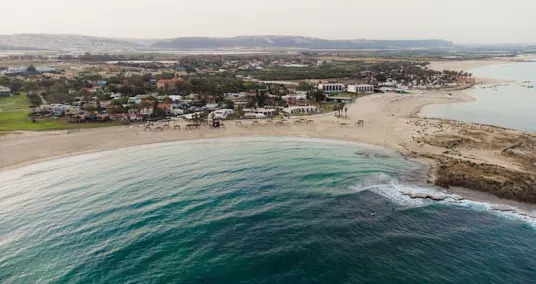
The discovery was made in an ancient shipwreck in the Dor Lagoon near the Carmel Coast, where archaeologists recovered nine pieces of unprocessed iron known as “blooms.”
Researchers from the University of Haifa said Wednesday that an underwater excavation off Israel’s northern Mediterranean coast uncovered what they described as the earliest known cargo of raw iron transported by ship, dating back around 2,600 years, Xinhua reported.
The discovery was made in an ancient shipwreck in the Dor Lagoon near the Carmel Coast, where archaeologists recovered nine pieces of unprocessed iron known as “blooms.” According to the university, the find provides direct evidence of how iron was transported in its earliest commercial stages.
The material was preserved in its original form, having solidified directly in a smelting furnace without undergoing forging or further refinement. Researchers said this distinguishes the cargo from later iron artifacts that typically show signs of shaping or tool-making.
Unlike copper and bronze, which could be melted into liquid form in ancient production processes, iron was heated with charcoal to produce a solid, porous mass. That mass was generally hammered to remove impurities and create denser material suitable for tools and implements.
The recovered blooms showed no indication of that secondary processing stage, suggesting they were transported immediately after production.

Earliest iron shipment discovered in ancient Mediterranean wreck
To determine the age and condition of the cargo, researchers conducted microscopic and chemical analyses.
Radiocarbon dating was also carried out on charred wood embedded in one of the pieces, helping confirm the timeline of the shipment. The findings were published in the journal Heritage Science.
Researchers said the cargo indicates that iron was being moved in raw form from production sites to other locations for further processing, pointing to a level of specialization in ancient manufacturing and trade networks in the Mediterranean.
The University of Haifa said the discovery provides new insight into early iron production and distribution practices in the region.
LATEST POSTS
- 1
 Keep It Cool: Uncovering Famous Fridge Brands for Each Home
 - 22024's Savvy Home Gadgets for an Associated Way of life
- 3Rick Steves Prefers Paying A Bit Extra For This Delectable Food When Dining In Spain
- 43 back-to-back storms forecast to bring snow and surges of cold air across the Midwest to the Northeast
- 5Study reveals links between global food systems, obesity, and climate change


- The most effective method to Consummate the Specialty of Handshaking in Business and Group environments
- WATCH: IDF strikes, dismantles missile launchers in southern Lebanon
- Man threatens attack on German high-speed train, 12 lightly injured
- Pick Your Number one breakfast food
- Greenland’s melting ice and landslide-prone fjords make the oil and minerals Trump is eyeing dangerous to extract
- Understanding Various Sorts of Financial balances: An Extensive Outline
- Crew-11 astronauts undock in 1st-ever medical evacuation from the International Space Station (video)
- The Significance of Health Projects in Senior Protection.
- Stop the ‘good’ vs ‘bad’ snap judgments and watch your world become more interesting